Enteral feeding pumps and portable fluid warmers sit at the bedside and travel with the patient: to imaging, to physical therapy, between ward and step-down, and increasingly into home care. Their electrical load is unusual because two very different actuators share one battery - a microwatt-scale peristaltic mechanism that turns once every few seconds, and a multiwatt heating element that holds delivered fluid inside a narrow therapeutic temperature band. Paper A dissects that combined heat-and-motor load, places it against IEC 60601-2-24 for infusion pumps and controllers, and explains what the profile demands of a nickel-metal hydride (NiMH) pack.
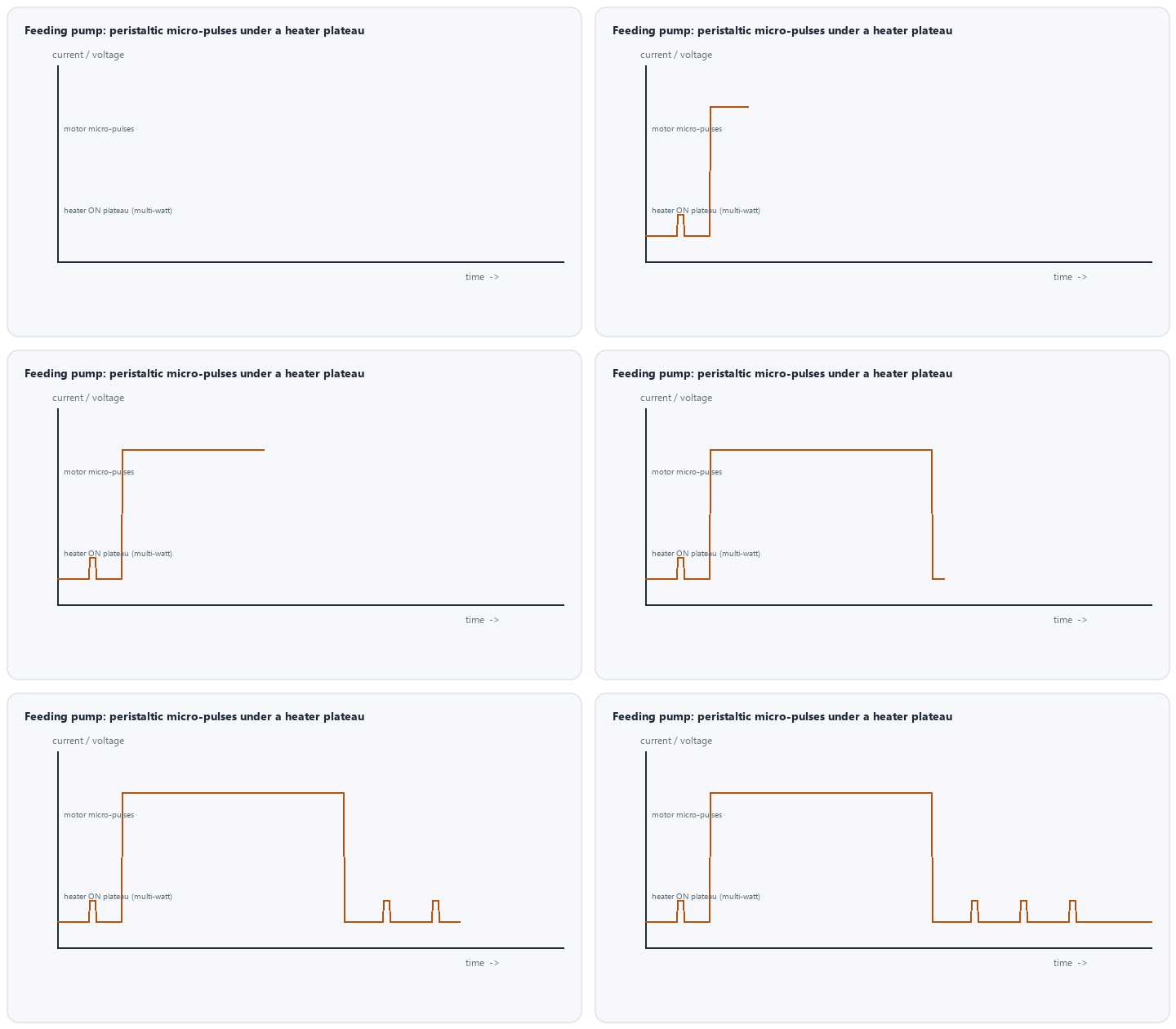
A rotary-peristaltic feeding pump compresses a silicone or PVC cassette in short steps: a small stepper or geared DC motor indexes a fraction of a turn, holds, then indexes again, with the duty set by the programmed flow rate. At a typical continuous enteral rate of 20-80 mL/h the motor is active for only a small fraction of the time, and the electronics between steps - sensor scan, display backlight dimmed, watchdog - draw very little. The warming function is a different world. Dry-plate and cassette warmers maintain a target near body temperature, commonly adjustable across roughly 33-41 °C with tight control (published platforms specify 0.1 °C adjustment steps and control error within about ±0.5 °C). Reaching and holding that temperature against a room-temperature feed line takes several watts during warm-up and a duty-cycled fraction of that in steady state. The animated trace below shows the small motor pulses riding under the broad heater plateau - the shape that sets both average energy and peak current.
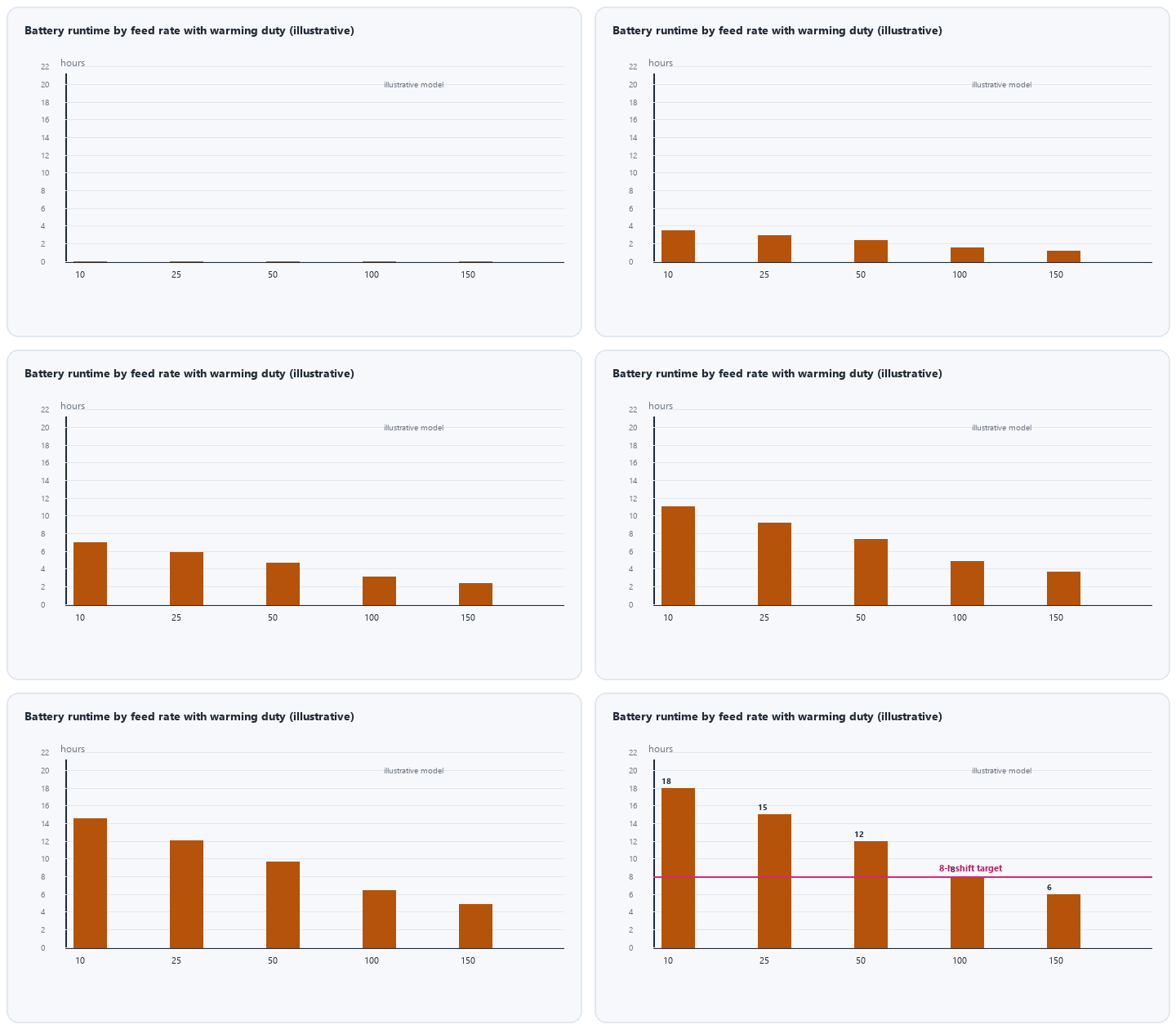
Unlike a consumer device, a feeding pump's duty is defined by the feed regimen. A 1000 mL bag delivered continuously at 50 mL/h lasts twenty hours; at 125 mL/h it lasts eight; bolus and intermittent schedules cluster delivery into windows. The battery must cover either a full bag away from the wall or a defined transport or care shift, and the question is which regimen dominates. Warming shifts the answer decisively: without heat, a four-AA-class pack can run a feeding mechanism for a day or more, but sustained warming multiplies average draw and shortens battery runtime to the range of a work shift. The animated chart below shows runtime falling as feed rate and the associated heater duty rise; the values are an illustrative model built around published platform patterns, and a real declaration must use the device's own measured average power at each setting.
Warming fluid is energetically expensive in a way motor drive is not: raising one litre of water by 15 °C requires roughly 17.5 Wh of heat even before losses, and maintaining temperature against a cooled giving set adds a continuous trickle. Portable warmers therefore manage energy with several tricks - heating only a short, thermally isolated segment of the line, pulsing the element under closed-loop control, and pre-warming during the docked phase - but the battery still sees a load dominated by heat rather than motion. For the pack designer this changes the priority list: average-current capability and stable voltage under a multiwatt sustained draw matter more than the microamp sleep floor, and self-heating of the cells during a long heater-on plateau must be added to the thermal model alongside the warming element itself.
IEC 60601-2-24, the particular standard for infusion pumps and controllers (whose scope covers enteral feeding devices), makes flow accuracy and alarm behaviour essential performance. The battery interacts with both. As a pack approaches depletion its voltage sags under each motor step and each heater pulse; if the controller undervoltage threshold is set too low, motor torque falls short, steps are skipped and delivered volume drifts from the programmed value before any alarm appears. Correct design defines a low-battery threshold with enough residual energy to finish an orderly transition - keep delivering accurately for a defined grace period, raise the audible and visible low-battery alarm per IEC 60601-1-8 alarm-priority rules, and preserve memory and regimen data - rather than stopping dead. That residual-energy budget is itself a sizing input, developed quantitatively in Paper B.
Feeding pumps and warmers are built in three power architectures: mains-fixed with no battery, dockable devices with an internal rechargeable pack, and ambulatory devices on primary cells. NiMH is the natural fit for the middle class. Its aqueous chemistry is intrinsically safe against thermal runaway in a device strapped to a bed rail or worn by a patient; its flat mid-discharge voltage supports stable motor torque and heater control; it tolerates the repeated shallow charge-discharge rhythm of dock-and-go ward use without the memory effect of old nickel-cadmium; and it is rechargeable through hundreds of cycles, which matters for rental fleets and home-care providers. Paper B compares chemistries and builds the per-bag energy budget; Paper C covers dosing-accuracy validation to end of discharge and the full standards trail.
Weijiang Power manufactures matched NiMH cells and custom packs for enteral feeding pumps and portable warming devices: low-impedance welded strings that hold voltage through heater plateaus, NTC supervision for the combined cell-plus-element thermal model, and IEC 61951-2, IEC 62133-1 and UN 38.3 documentation. Send us your flow-rate range, heater electrical profile, target per-bag or per-shift runtime and docking charge pattern and we will size a pack that keeps both delivery accuracy and alarm margin to the last programmed millilitre.


